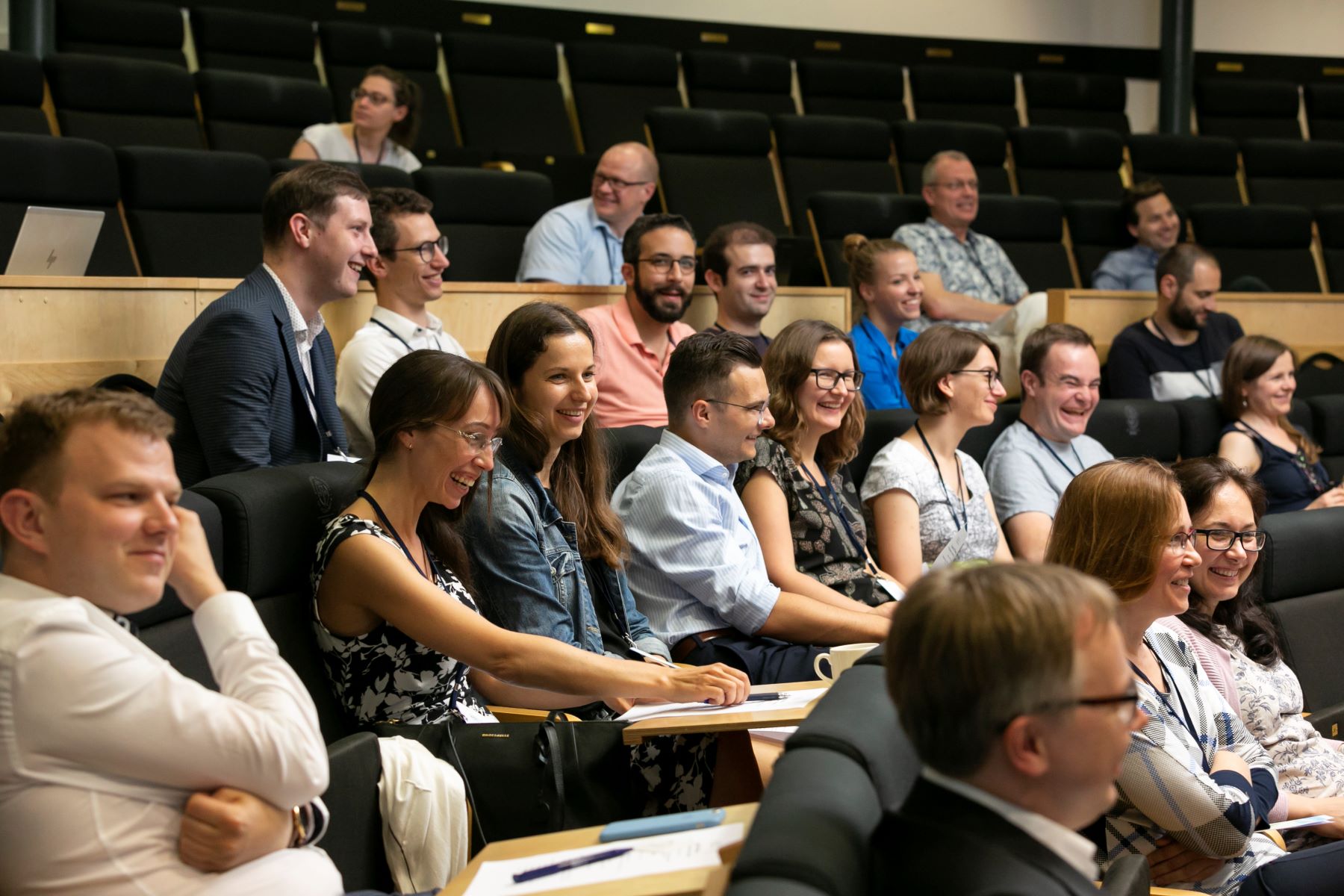

Tallinn University of Technology Research Seminar, 23 September

Please be invited to the upcoming TalTech research seminar, to take place on 23 September at 16:00, in which Merike Kukk (Eesti Pank & Tallinn University of Technology) will present her work: When Weights Matter: Expenditure Reallocation and Food Inflation Across the Price Distribution

MS Teams link

Abstract. This paper highlights the importance of weights in measuring food inflation across the product price distribution. Using barcode-level retail scanner data from Estonia for 2014–2018, we compare base-period-weighted and current-period-weighted year-on-year price changes for food and non-alcoholic beverages. We document consumer purchases are highly concentrated in relatively low-priced products: about one third of purchases are made in the lowest price quintile within product groups, and around 70% are made below the median. Expenditure weights change the measured inflation dynamics, as consumers reallocate expenditure away from products with price increases and toward products with price declines, so base-period weights overstate price increases and understate the role of price decreases. Price dynamics differ systematically across price deciles and across regimes, during deflation lower-priced products experienced deeper deflation, whereas during inflation it was higher in the lower and middle parts of the price distribution. These findings show that expenditure weights and expenditure reallocation are important for understanding measured inflation.

Call for Papers: 15th Annual Lithuanian Conference on Economic Research, 23 December

Paper submissions for the 15th Annual Lithuanian Conference on Economic Research are open. This one-day conference is hosted by Lietuvos Bankas that will take place on December 23, 2026, in Vilnius, Lithuania.

The conference will cover a broad range of topics in theoretical and empirical economics, including but not restricted to macroeconomics, microeconomics, financial economics, labour economics, and political economy.

Please submit full papers or extended abstracts here.

The deadline for paper submissions is November 1, 2026. The submitting authors will be notified by November 22, 2026.

More information available at https://meeting.econ.lt/

Latvijas Banka Research Seminar, 13 October

Please be invited to the upcoming Latvijas Banka’s research seminar, to take place on 13 October at 10:30, in which Diana Bonfim (ECB and Banco de Portugal) will present her work: Monetary Policy at the Margin

Diana will also provide a brief overview of the main findings of the recent ESCB ChaMP research network.

MS Teams link

Abstract. Zero-bank-debt firms (ZBD firms) face, due to their lack of credit history, more difficult access to bank loans than firms with previous bank debt (non-ZBD firms). While overall monetary policy does not affect the likelihood that ZBD firms obtain credit for the first time relative to comparable non-ZBD firms, expansionary monetary policy eases the credit constraints faced by those firms, especially when they are young. As increased access to credit by ZBD firms does not lead to a higher probability of having non-performing loans but has greater effects on employment growth and investment than those experienced by comparable non-ZBD firms, this channel could be beneficial for the whole economy without entailing financial stability risks.

University of Tartu Research Seminar, 7 October

Please be invited to the upcoming University of Tartu research seminar, to take place on 7 October at 14:00, in which Anastasiia Pustovalova and Priit Vahter (both University of Tartu) will present their work: How complementarities between automation and organisational innovation shape the wages of a firm’s employees: The role of social skills

Zoom link

Abstract. Technological and organisational innovations are often viewed as complementary in improving firm performance. Much less is known, however, about whether employees share the gains associated with these complementarities. This paper investigates whether expected complementarities between automation and organisational innovation are reflected in employee wages and examines the role of employees’ social skills in shaping these outcomes. Using linked employer–employee data for Estonian manufacturing firms, combining firm-level information on automation investments, organisational innovation and ESCO-based measures of social skills, we estimate wage equations using firm fixed effects and coarsened exact matching, and an event study approach. We find no evidence that the joint adoption of automation and organisational innovation generates broad complementarity effects in terms of wage gains. Instead, wage effects are highly heterogeneous. The strongest evidence of wage gains associated with joint adoption of automation and organisational innovation emerges among higher-educated employees working in occupations that require strong social skills and in firms engaged in persistent automation investments.

University of Tartu Research Seminar, 30 September

Please be invited to the upcoming University of Tartu research seminar, to take place on 30 September at 11:00, in which Peter McClenaghan (University of New England) will present his work: Beyond the Heroic Leader: Cultivating Time Persistent Trust (TPT) for Sustainable School Change

Zoom link

Abstract. Drawn from a six-year, longitudinal qualitative study in regional Australia, we tracked leadership practices across three consecutive school principal “eras.” What we discovered was a form of trust that was not fleeting or tied solely to a single personality. Instead, trust was deliberately fostered, transferred, and maintained over time. This TPT emerged as the most significant enabling factor for shifts in professional practice, allowing the school to navigate “leadership churn” without losing momentum.